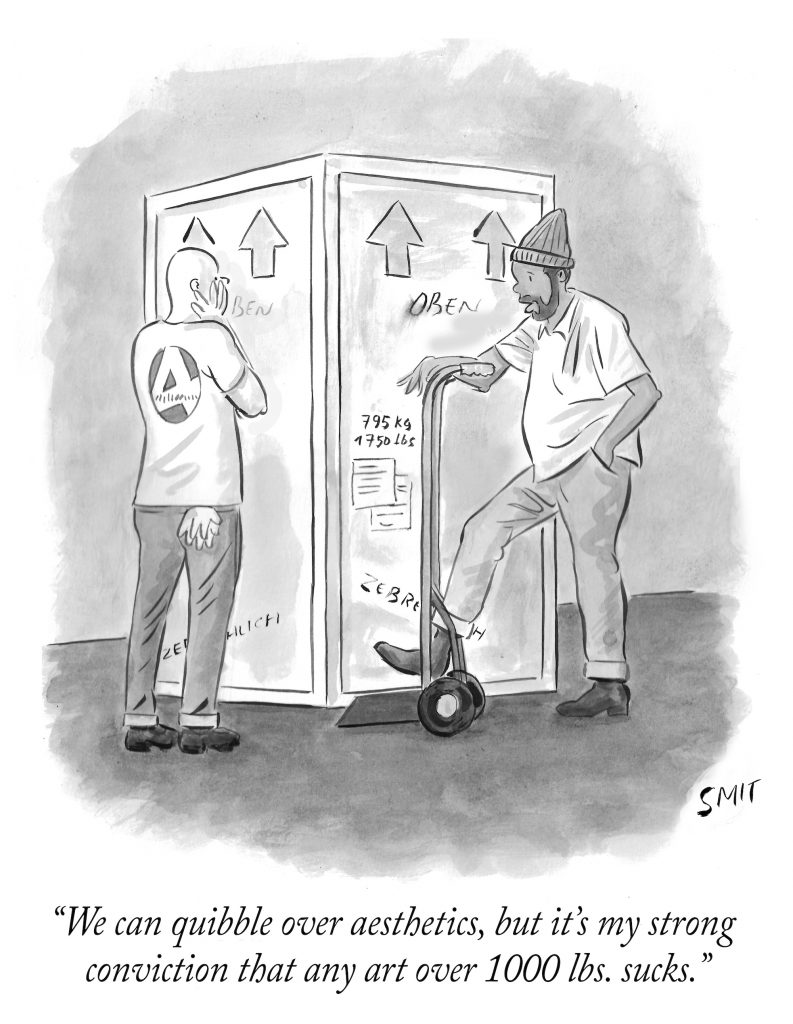
What’s the Fastest Way to Ruin an Art Handler’s Day?, 2022
Why?
You’ve made the work and landed a show. Now what? How do you make sure your work gets there safely, and how do you cover yourself if it doesn’t? The methods outlined in the chapter won’t cover every scenario or type of art, but they are a good starting point and will bring up points that should be considered regardless of size or medium.
Required
Getting Your Work to the Show, Art/Work
Pages 218–237
Response Questions
Select one question below to which you will respond. Remember to cite specific instances from the text to support your views.
- How might this chapter apply to your art practice?
- How do concerns of packing and shipping impact how you might construct your artwork, or if you might abandon a way of working all together?
Supplementary Readings
These are optional readings to help enrich your understanding of the themes of this reading set.
- Art Packing and Shipping
-
Building a Crate
“This video is about how I build a wood shipping crate to ship a large painting by freight truck.”
How to Pack Fine Art into a Crate For Shipping Video
“Your art is precious, unique, and valuable. You have to make sure it gets to its new home safely. In this video, Tanner explains how to pack your fine art safely into a crate for shipping. Join Tanner to learn the process of safely prepping your art for transport.”
Shipping Crate Speedbuild
“Making a custom ship crate for one of my eSports awards. Gotta make these things battering rams in order to survive the rigors of FedEx and UPS.”
How FINE ART is TRANSPORTED
Crate building starts at around 02:33. “This is the process of crating a sculpture of mine for a cross country trek to the Fuller Craft Museum in Brockton, Massachusetts. Having worked in museums for nearly a decade before starting this channel, crate building was one of my favorite parts of that job. Every piece of art is unique, so crate building involves a TON of problem solving. ”